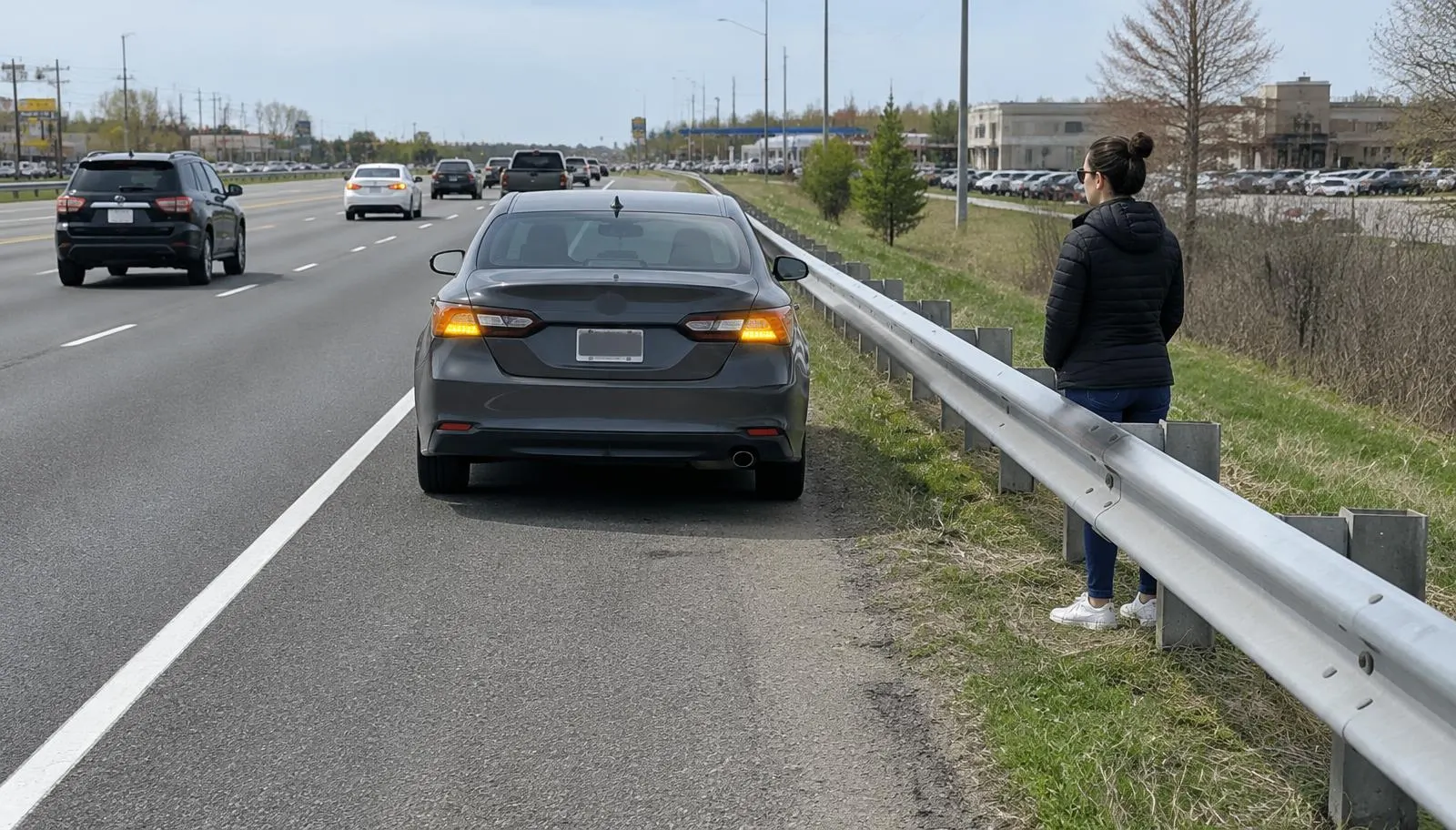
Route 1 through Saugus and Lynnfield, the Lynnway, Revere Beach Parkway and Route 1A are some of the busiest roads on the North Shore. Traffic moves fast, shoulders are narrow, and drivers are often watching for turns instead of a stopped car. If your car breaks down on one of these roads, staying safe matters more than anything else.
Step 1: Get as far out of traffic as you can
As soon as you feel something wrong, such as a shake, a warning light, a loss of power or a flat tire, turn on your hazard lights and start moving toward the right side of the road while the car is still rolling. If there's a parking lot, side street, breakdown lane or wide shoulder ahead, aim for it. A few hundred feet on a flat tire is better than stopping in a travel lane, even if it damages the rim.
If the car stops in a travel lane and won't move, keep your hazards on and your seatbelt fastened while you decide what to do next.
Step 2: Decide whether to stay in the car or get out
There's no single right answer, so think about where you are.
- If you're on a wide shoulder or in a lot, staying in the car with your seatbelt on is usually safest.
- If you're stopped in or near a lane of fast traffic and you can safely get out on the side away from traffic, it may be safer to get out and move behind a guardrail or well away from the road.
- Never stand between your car and traffic, and never stand behind your car.
- If you smell gas or see smoke, get everyone out and away from the car.
Step 3: Make your car easy to see
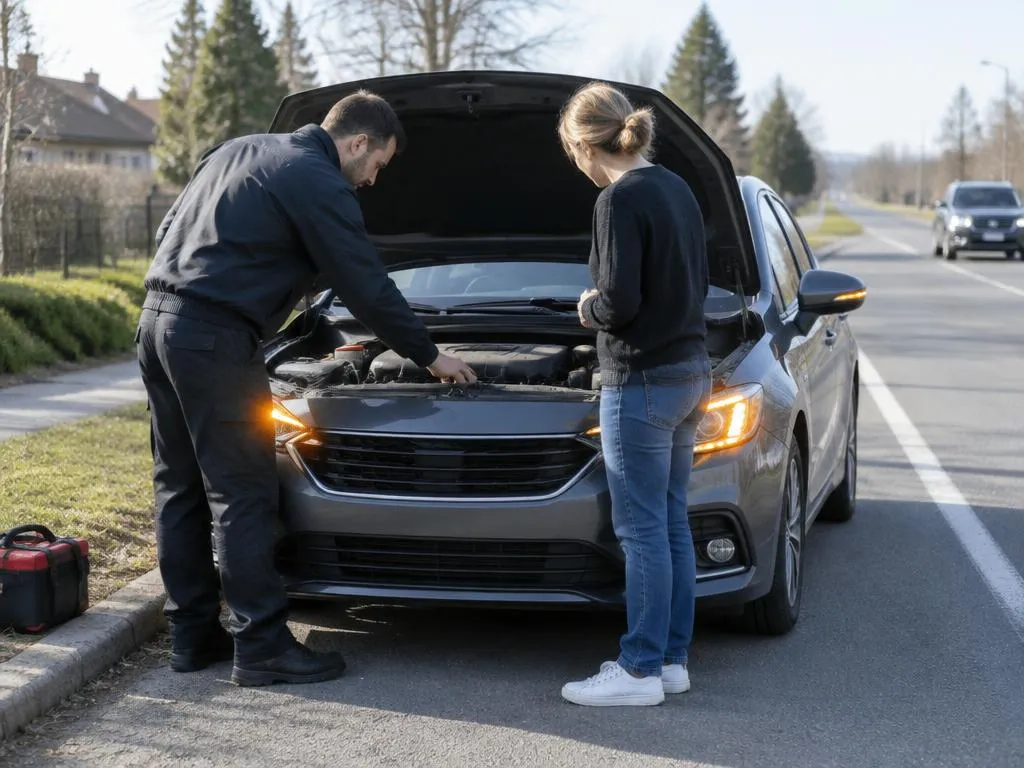
Keep your hazard lights on. At night, turn on your interior dome light. If you have reflective triangles or flares and you can place them safely without walking into traffic, put them well behind the car. Raising the hood is a common signal that you need help, but only do it if you're safely off the road.
Step 4: Call, and know exactly where you are
The most helpful thing you can give a tow company is a precise location. Before you call, look for:
- The road name and direction (northbound/southbound on Route 1, inbound/outbound on the Lynnway)
- The nearest cross street, business, exit number or landmark
- Which side of the road you're on
Your phone's map app can show your exact spot, and you can share the pin when we text you back. Also have ready: the vehicle year, make and model, what happened, and where you want the car taken.
Highways and tunnels work differently
On limited-access highways like I-95/Route 128 and I-93, and inside the Boston tunnels, State Police usually send an assigned tow company to clear a broken-down car. If you break down on one of those roads, call 911 or the State Police if you're in danger, and follow their instructions. Once your car is off the highway, you can call us for the next move, like a tow to your own mechanic.
Know the Move Over law, but don't count on it
Massachusetts' Move Over law asks drivers to slow down and move over for stopped emergency and roadside vehicles. That helps, but not every driver pays attention. Stay out of the lane, keep kids and pets inside or well away from traffic, and wait for the tow truck to set up before you walk around your car.
What happens when the tow truck arrives
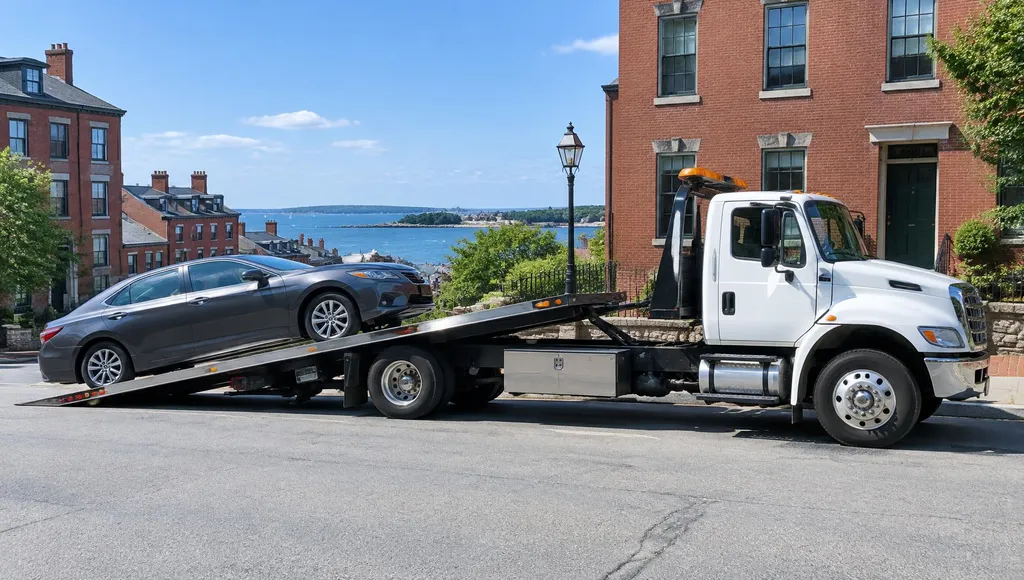
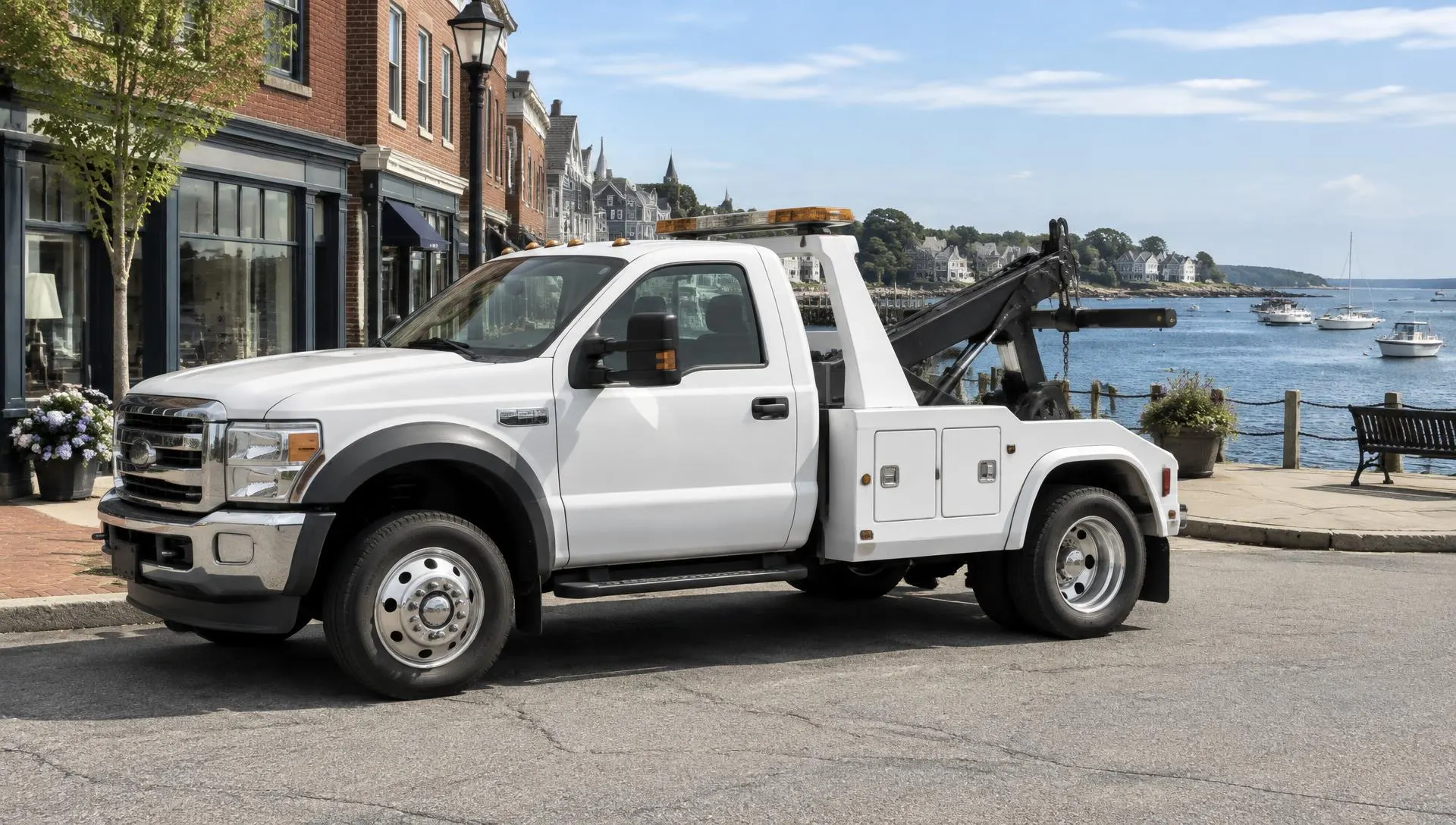
Our driver will position the truck to protect the work area, confirm where the car is going, and load it. Take your valuables, phone charger, garage door remote and anything you'll need from the car before it's loaded. If you're getting a ride in the truck, ask on the phone first (it depends on the situation).
Not every breakdown needs a tow
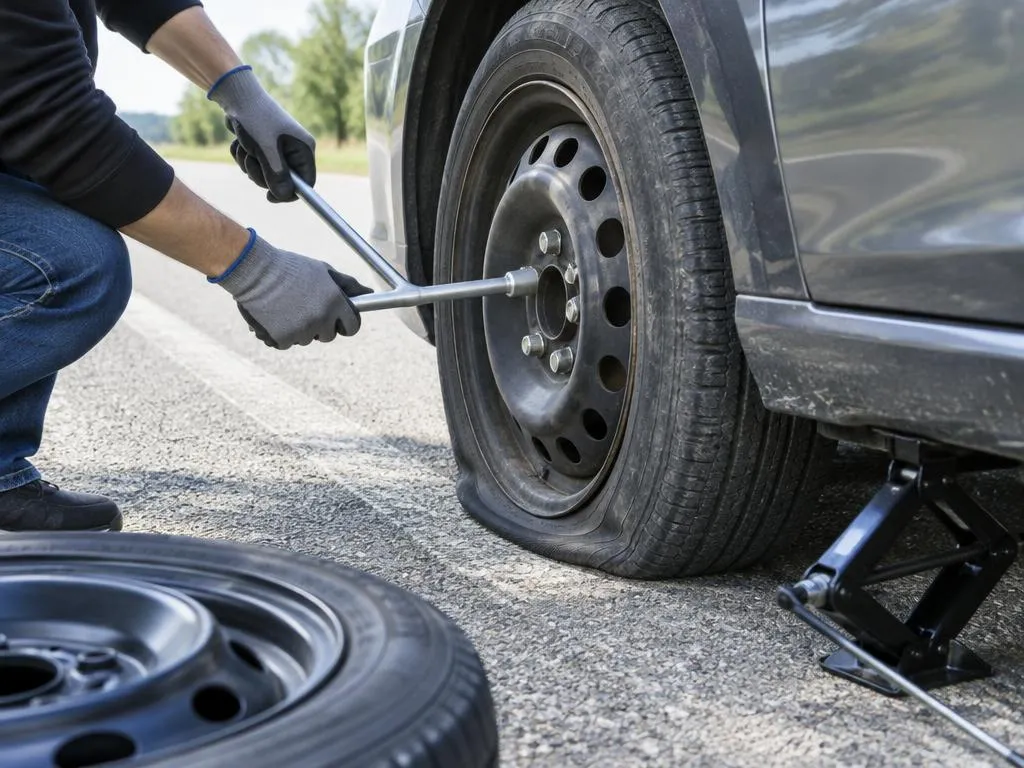
A flat tire with a good spare, an empty fuel tank or a lockout can often be handled right where you are, once you're in a safe spot. See our roadside assistance page to understand when we can fix it on the spot and when towing is the better call.
Stuck near Lynn right now?
If you're safe and off the road in Lynn, Saugus, Revere or a nearby town, call Lyly Towing at (833) 630-3011. Tell us your road, direction and the nearest landmark, and we'll take it from there.